
Why Indoor Cats That Escape Outdoors Are So Hard to Find
And How Thermal Drone & Monocular Technology Is Changing Pet Recovery in Kansas City
Indoor cats that accidentally make it outside don’t behave like outdoor cats—and that difference is exactly why so many well-meaning search efforts fail.
At KC Pet Search & Rescue, we specialize in locating escaped indoor cats using advanced thermal technology, combining aerial drone scanning and ground-based thermal monoculars to find cats that are physically present—but completely invisible to the naked eye.
This approach is redefining pet recovery in the Kansas City metro and surrounding Johnson County communities.
How Indoor Cats Actually Behave After Escaping
When an indoor cat gets outside, instinct immediately takes over—but not in the way most owners expect.
Instead of roaming, indoor cats typically:
-
Hide within 50–200 feet of the escape point
-
Seek tight, dark, enclosed spaces
-
Remain silent—even when called
-
Avoid open areas and human activity
-
Freeze rather than flee when scared
This behavior explains why neighbors can walk past the same yard multiple times and never see the cat—even when it’s there the entire time.
Where Indoor Cats Hide (And Why You Can’t See Them)
Indoor cats prioritize concealment over movement. Common hiding locations include:
-
Under decks and porches
-
Beneath sheds or outdoor stairs
-
Inside dense shrubs or hedges
-
Under parked vehicles
-
In crawl spaces or foundation gaps
-
Against heated structures like HVAC pads or concrete walls
These locations create thermal blending, visual obstruction, and sound suppression—making traditional search methods ineffective.
Even if your cat is ten feet away, you may never see it with flashlights or daytime searching.
Why Traditional Search Methods Fail Indoor Cats
Most lost-pet advice was written with dogs or outdoor cats in mind. For indoor cats, these methods often backfire:
-
Calling loudly can cause the cat to burrow deeper
-
Flashlights miss heat-retaining hiding spots
-
Trail cameras require movement (which indoor cats avoid)
-
Flyers help sightings—but not detection
Indoor cats don’t “travel.”
They disappear in place.
That’s where thermal technology changes everything.
Thermal Imaging: Seeing What Human Eyes Can’t
Thermal imaging detects heat differentials, not light. That means:
-
Darkness doesn’t matter
-
Brush doesn’t fully conceal heat
-
Partial obstructions still glow
-
Cats hiding motionless are still visible
At KC Pet Search & Rescue, we use professional-grade thermal equipment to locate cats that owners have unknowingly walked past for days.
Aerial Thermal Drones: The Neighborhood Overview
Thermal drones provide a wide-area scan of the surrounding neighborhood, identifying:
-
Heat signatures under decks
-
Cats tucked against buildings
-
Warm shapes inside brush lines
-
Movement patterns after dark
This aerial perspective allows us to:
-
Eliminate large areas quickly
-
Detect cats hiding off the property
-
Identify escape routes and concealment zones
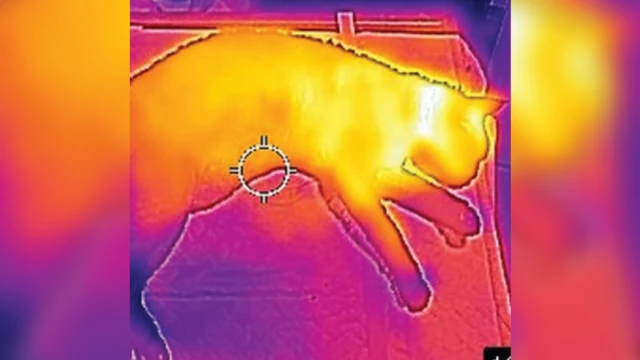
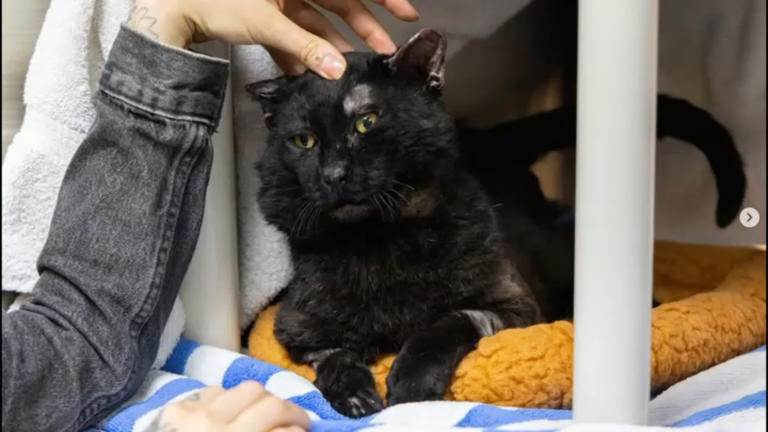
Instead of guessing where a cat might be, we confirm where it is.
Ground-Based Thermal Monoculars: Precision Confirmation
Once a heat signature is detected, ground-based thermal monoculars allow precise confirmation without disturbing the cat.
These devices excel at:
-
Looking deep under structures
-
Scanning dense vegetation
-
Confirming presence before approach
-
Avoiding false positives (raccoons, opossums, rabbits)
This step is critical—especially for frightened indoor cats that will flee if startled.
Why Indoor Cats Are “There” But Never Seen
Owners often tell us:
“We searched everywhere—there’s no way the cat is still here.”
In reality, indoor cats are often:
-
Within a few houses
-
Directly under a deck they checked
-
Behind shrubs they walked past
-
So still they appear lifeless
Thermal imaging removes uncertainty.
If the cat is there, we see it.
Timing Matters: Why Early Thermal Searches Work Best
Thermal recovery is most effective when:
-
The cat escaped recently
-
Weather conditions preserve heat contrast
-
Human and animal traffic is minimal
-
The cat has not been chased
This is why KC Pet Search & Rescue emphasizes rapid deployment and methodical scanning, rather than random searching.
Why KC Pet Search & Rescue Is Different
KC Pet Search & Rescue isn’t guessing. We’re applying technology used in professional search and rescue to pet recovery—specifically for indoor cats.
What sets us apart:
-
Dedicated thermal pet-recovery focus
-
Aerial + ground thermal integration
-
Experience with indoor-cat behavior
-
Neighborhood-level scanning strategy
-
Data-driven search methodology
We don’t rely on hope.
We rely on detection.
The Future of Cat Recovery Is Thermal
Indoor cats don’t need louder searching.
They need better tools.
Thermal drones and monoculars are redefining what’s possible—turning invisible cats into visible heat signatures and transforming recovery from chance to strategy.
For Johnson County and the greater Kansas City area, KC Pet Search & Rescue is leading that shift.
If your indoor cat escaped and you can’t find them, it doesn’t mean they’re gone.
It usually means they’re hidden.
And hidden is exactly what thermal technology is built to uncover.
Thermal Pet Recovery in Kansas City: A Smarter Way to Find Indoor Cats
Kansas City’s dense neighborhoods, older housing stock, and layered landscaping create the perfect hiding environment for escaped indoor cats.
From Brookside and Waldo to Overland Park borders, many KC homes feature:
-
Raised decks and porches
-
Crawl spaces and foundation gaps
-
Mature shrubs and hedgerows
-
Detached garages and sheds
-
Tight property spacing between homes
These environments allow indoor cats to disappear within feet of their escape point, often remaining unseen for days or weeks.
Traditional search methods struggle in Kansas City because:
-
Cats hide under shared structures between properties
-
Visual line-of-sight is blocked by fences and landscaping
-
Flashlights and daytime searches miss concealed spaces
-
Neighbors unknowingly walk past the cat repeatedly
Why Thermal Works So Well in Kansas City
Thermal imaging excels in urban and suburban KC neighborhoods because it:
-
Detects cats under decks and porches
-
Identifies heat signatures along foundation lines
-
Sees through brush and vegetation at night
-
Distinguishes animals from surroundings
Using thermal drones, KC Pet Search & Rescue scans entire blocks quickly—then confirms findings with ground-based thermal monoculars for precision recovery.
This dual-layer approach allows us to locate cats that have remained invisible despite multiple search attempts.
Johnson County Indoor Cat Recovery: Built for Suburban Search Challenges
Johnson County presents a unique set of challenges for lost indoor cats—and it’s where thermal pet recovery is most effective.
Cities like Overland Park, Olathe, Lenexa, Shawnee, Gardner, and Prairie Village feature:
-
Large residential decks
-
Expansive backyard fencing
-
Thick landscaping buffers
-
Multi-level homes with crawl spaces
-
Quiet nighttime environments
Indoor cats in Johnson County typically do not roam. Instead, they hide close, remaining stationary and silent.
Why Indoor Cats in Johnson County Are “There” But Not Seen
We regularly locate cats that:
-
Are hiding under their own deck
-
Are concealed beneath a neighbor’s porch
-
Haven’t moved more than a few yards
-
Are present during every search—but unseen
Thermal technology changes the equation by detecting body heat, not movement or visibility.
With aerial thermal scanning, we identify likely hiding zones across multiple properties.
With thermal monocular confirmation, we verify presence without disturbing the cat.
This method dramatically improves outcomes for indoor cat recovery—especially in Johnson County’s deck-heavy neighborhoods.
Why KC Pet Recovery Leads Thermal Cat Recovery in the KC Metro
KC Pet Search & Rescue was built specifically to solve the indoor-cat problem using modern detection tools, not outdated advice.
Our approach is:
-
Designed for indoor cats
-
Optimized for KC & Johnson County neighborhoods
-
Based on heat detection—not chance sightings
-
Focused on fast, non-invasive location confirmation
Indoor cats don’t need louder searching.
They need technology that sees where they hide.
Indoor Cat Thermal Recovery Across Kansas City & Johnson County Cities
Indoor cats behave the same everywhere—but where they hide depends heavily on neighborhood design. That’s why KC Pet Search & Rescue tailors thermal search strategies to specific cities and housing patterns across the KC metro.
Overland Park Indoor Cat Recovery with Thermal Technology
Overland Park neighborhoods are built for concealment.
Common recovery challenges include:
-
Large raised decks with deep shadows
-
Tiered backyards with retaining walls
-
Dense privacy hedges
-
Multi-home heat overlap at night
Indoor cats in Overland Park almost always remain within one or two properties, frequently hiding beneath structures they’ve already been searched for visually.
Thermal drones allow us to:
-
Scan multiple yards quickly (without disturbance)
-
Identify heat signatures under decks and porches
-
Eliminate false assumptions early
Ground thermal monoculars then confirm exact position before any approach is attempted.
Olathe Indoor Cat Recovery: Finding Cats That Haven’t Moved
In Olathe, indoor cats often remain extremely close to the escape point—sometimes directly under the home they exited.
Why Olathe searches fail without thermal:
-
Large crawl spaces mask movement
-
Cats wedge into foundation corners
-
Landscaping blocks line-of-sight
-
Cats remain silent even when owners are nearby
Thermal imaging consistently reveals cats that owners believed had “already left the area.”
They hadn’t.
They were hiding.
Lenexa & Shawnee: Dense Neighborhoods, Invisible Cats
Lenexa and Shawnee neighborhoods pose a different problem—tight spacing.
Here, indoor cats may:
-
Hide beneath neighboring decks
-
Shelter between closely spaced homes
-
Move only at 3–5 AM
-
Remain undetected despite active searching
Aerial thermal scanning helps identify which property a cat is actually under, avoiding unnecessary disturbance and increasing recovery success.
Prairie Village & Older KC-Area Neighborhoods
Older neighborhoods present:
-
Shallow but cluttered crawl spaces
-
Mature landscaping with heat retention
-
Detached garages and sheds
-
Narrow access points
These areas are notorious for “ghost cats”—present but unseen.
Thermal imaging excels here by detecting:
-
Heat against concrete foundations
-
Cats tucked behind stored items
-
Warm signatures beneath low-clearance decks
Why City-Specific Thermal Matters
Cats don’t disappear.
They blend.
Each city has a different thermal landscape—and KC Pet Search & Rescue adjusts tactics accordingly.
Frequently Asked Questions About Indoor Cats & Thermal Recovery
(Perfect for FAQ Schema & Google PAA)
Why can’t I find my indoor cat if it’s nearby?
Indoor cats rely on hiding, not movement. They often remain silent and motionless, tucked into tight spaces where human vision cannot reach. Even experienced searchers frequently walk past them.
How far do indoor cats usually go after escaping?
Most indoor cats stay within 50–200 feet of where they escaped, especially during the first several days. They typically hide rather than roam.
Does thermal imaging really work for cats?
Yes. Thermal imaging detects body heat, not visibility or movement. Even motionless cats hidden under decks, porches, or shrubs emit a detectable heat signature.
Why use both drones and thermal monoculars?
Drones provide a wide-area overview, identifying possible locations quickly. Thermal monoculars allow precise confirmation at ground level without disturbing the cat.
Will my cat run if found with thermal?
Thermal allows detection before physical approach, reducing surprise and flight risk. This is especially important for scared indoor cats.
Is thermal recovery better at night?
Yes. Cooler temperatures improve heat contrast, making cats stand out more clearly against their surroundings.
Why KC Pet Search & Rescue Is #1 for Thermal Cat Recovery in the KC Metro
KC Pet Search & Rescue was built around detection-first recovery, not guesswork.
We specialize in:
-
Indoor-only cats
-
Thermal-based confirmation
-
KC & Johnson County neighborhoods
-
Non-invasive recovery strategies
We don’t rely on sightings.
We rely on heat signatures.
KC Pet Search & Rescue – Emergency Pet Recovery Directory
If your pet is missing in Johnson County, Kansas, the resources below provide immediate guidance, emergency response options, and location-specific recovery services for both lost dogs and indoor cats.
🚨 Emergency Pet Recovery Services (Start Here)
KC Pet Search & Rescue – Emergency Pet Locator Service
https://kcpetsearchandrescue.com/joco-pet-rescue/
Drone-Assisted Emergency Pet Locator Services – Johnson County, KS
https://kcpetsearchandrescue.com/emergency-pet-locator-johnson-county-ks/
My Pet Is Gone — What Should I Do Right Now?
https://kcpetsearchandrescue.com/my-pet-is-gone-what-now/
KC Pet Search & Rescue – Emergency Pet Locator Service
https://kcpetsearchandrescue.com/joco-pet-rescue/
Drone-Assisted Emergency Pet Locator Services – Johnson County, KS
https://kcpetsearchandrescue.com/emergency-pet-locator-johnson-county-ks/
My Pet Is Gone — What Should I Do Right Now?
https://kcpetsearchandrescue.com/my-pet-is-gone-what-now/
🐕 Lost Dog Search & Recovery
Mission Dog Page – Lost Dog Search & Recovery
https://kcpetsearchandrescue.com/lost-dog-search-recovery-joco-pet-rescue/
Lost Dog Recovery – Kansas City Area
https://kcpetsearchandrescue.com/lost-dog-recovery-kansas-city/
Mission Dog Page – Lost Dog Search & Recovery
https://kcpetsearchandrescue.com/lost-dog-search-recovery-joco-pet-rescue/
Lost Dog Recovery – Kansas City Area
https://kcpetsearchandrescue.com/lost-dog-recovery-kansas-city/
🐈 Lost & Missing Cat Recovery
Missing Cat Recovery – Johnson County, KS
https://kcpetsearchandrescue.com/lost-cat-recovery-johnson-county/
Why Indoor Cats Hide After Escaping Outdoors
https://kcpetsearchandrescue.com/indoor-cats-that-escape-outdoors/
Missing Cat Recovery – Johnson County, KS
https://kcpetsearchandrescue.com/lost-cat-recovery-johnson-county/
Why Indoor Cats Hide After Escaping Outdoors
https://kcpetsearchandrescue.com/indoor-cats-that-escape-outdoors/
📚 Pet Recovery Articles & Guides
Emergency Pet Recovery Service – What to Expect
https://kcaerialvision.blogspot.com/2026/01/emergency-pet-recovery-service-in.html
Why Indoor Cats That Escape Outdoors Are Hard to Find
https://kcaerialvision.blogspot.com/2026/02/why-indoor-cats-that-escape-outdoors.html
Lost Dog Recovery in Kansas City – Real-World Scenarios
https://kcaerialvision.blogspot.com/2026/02/lost-dog-recovery-in-kansas-city.html
Emergency Pet Recovery Service – What to Expect
https://kcaerialvision.blogspot.com/2026/01/emergency-pet-recovery-service-in.html
Why Indoor Cats That Escape Outdoors Are Hard to Find
https://kcaerialvision.blogspot.com/2026/02/why-indoor-cats-that-escape-outdoors.html
Lost Dog Recovery in Kansas City – Real-World Scenarios
https://kcaerialvision.blogspot.com/2026/02/lost-dog-recovery-in-kansas-city.html
📍 Johnson County Pet Recovery Service Areas
If your pet went missing near your home, use the location-specific pages below for targeted recovery coverage:
Olathe
Overland Park
Leawood
Gardner
Lenexa
De Soto
Shawnee
Spring Hill
https://kcpetsearchandrescue.com/emergency-pet-locator-services-in-spring-hill-kansas/
https://kcpetsearchandrescue.com/locations/pet-recovery-search-services-in-spring-hill-kansas/
https://kcpetsearchandrescue.com/emergency-pet-locator-services-in-spring-hill-kansas/
https://kcpetsearchandrescue.com/locations/pet-recovery-search-services-in-spring-hill-kansas/
🧭 Johnson County Pet Recovery Hub
Johnson County Pet Recovery Services – City Hub
https://kcpetsearchandrescue.com/johnson-county-pet-recovery-services/
Johnson County Pet Recovery Services – City Hub
https://kcpetsearchandrescue.com/johnson-county-pet-recovery-services/


No comments:
Post a Comment